





Fabrics made of stainless steel fibers for high temperatures management
The characteristics of the stainless steel fibers used in our refractory fabrics (+/-800°C)
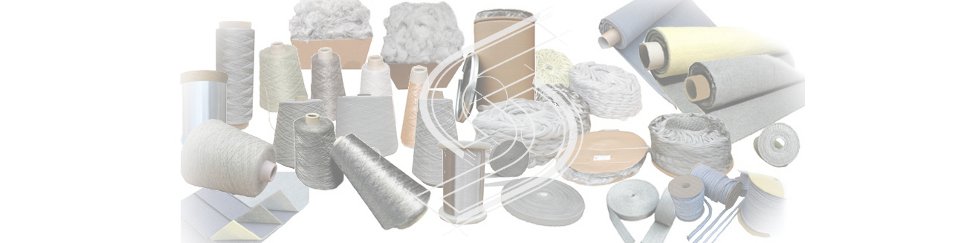
The metal fibers (primarily 316L stainless steel; please contact us for other alloys) that we manufacture in France and use in some of our metal fabrics—which are suitable for high-temperature applications (up to 800°C)—combine the flexibility of a traditional textile fiber, such as wool, with the structure of a fabric or mesh (flexibility, porosity, lightness...), with high thermal resistance in the range of several hundred degrees, as well as with other characteristics of stainless steels such as: electrical conductivity, thermal conductivity, density, weldability, corrosion resistance, recyclability... . Almost as flexible as a natural fiber, they are ideal for manufacturing flexible and durable fabrics, braids, and refractory sleeves. They allow, sometimes as a substitute for asbestos, or when fiberglass is not sufficiently effective, for tools to be protected from high thermal stresses, while preventing thermal shock on the one hand and, on the other, marking or deforming materials softened by heat—such as incandescent glass just removed from molds, for example. Textiles made with these calibrated fibers—which, as we shall see, are so unique and fine that they are ultimately very soft and do not scratch—thus preserve the pristine condition of the items they come into contact with.
These ultra-fine metal fibers (2 to 3 times thinner than a human hair) are produced through a hot-drawing process involving successive drawing operations; they may or may not be crimped at the end of this process. Their fineness gives the fabric they form great flexibility and relative softness (for metal). They are then processed using textile manufacturing methods specially adapted for working with these unique stainless steel fibers.
The steel alloy we primarily use in our technical textiles is AISI 316L, which has the following composition :
|
Carbon C |
Silicium Si |
Manganese Mn |
Nickel Ni |
Chromium Cr |
Molybdenum Mo |
Sulphur S |
Phosphorus P |
Iron Fe |
|
|
AISI 316L |
0.03 max |
1.00 max |
2.00 max |
10-14 max |
16-18 max |
2-3 max |
0.03 max |
0.045 max |
Balance |
Others alloys are available on request, diverse structues, other metals, blends with non metal fibres... Contact our team
The international terminology of the AISI 316L stainless steel alloy is :
|
UNS |
Alloy |
EN 10088 |
Material Na |
|
S31603 |
316L |
X2CrNiMo17 12 2 |
1.4404 |
__________________________________________________________________________________________________
Physical Characteristics of Stainless Steel Fibers for High-Temperature Fabrics
The fineness of the fibers is expressed by measuring the diameter of individual fibers in microns. Standard diameters range from 6 to 30 microns. At CREAFIBRES, when it comes to 316L stainless steel, we primarily use premium fibers with diameters of 8 µm, 12 µm, and 22 µm to manufacture our felts and other woven, knitted, and braided products...
|
Fibers diameter |
Electrical resistance (Ω.cm) |
Tenacity (cN) |
Stretching |
|
8 µ |
170 |
7-8 |
1 % |
|
12 µ |
80 |
17-18 |
1 % |
|
22 µ |
30 |
55-60 |
1 % |
In addition to their thermal properties—an important feature that makes them a staple in our applications—products such as fabrics made from stainless steel fibers are also distinguished by their high density. On average, this material is five times heavier than most synthetic or natural fibers, as shown in the table below:
|
Cotton |
Wool |
Polyester |
Para-aramid |
Méta-aramid |
Ceramics Alumine |
Glass E |
AISI 316L |
|
|
Masse volumique (g/m3) |
1,50 |
1,31 |
1,38 |
1,44 – 1,47 |
1,38 |
3,40 – 3,90 |
2,60 |
7,95 |
This measure is important to get the equivalence with the diameter of a classic yarn stated in Tex or Metric Count (Nm).
For instance, a stainless steel yarn Nm 11/2 or 182 Tex is seemingly equivalent to a yarn of (182*1,5)/7,95 = 34,4 Tex of cotton ie. a yarn of Nm 60/2.
The following table gives yarn counting conversion:
|
Metric count |
1 Nm |
1 m |
1 g |
|
Decitex |
1 Dtex |
10000 m |
1 g |
|
Deniers |
1 Den |
9000 m |
1 g |
- austenic steel with a cutting resistance
- corrosion resistance
- chemical resistance
- flex fatigue resistance
- ductility similar to copper material
- melting point : 1380 °C
- magnetism during work hardening
- washing resistance
- Thermal transfer and heat dissipation
- electric conductivity
Heat transfer and weight reduction thanks to 100% Stainless Steel fabrics
As described above, at CREAFIBRES we are able to combine the unique characteristics of textiles with the performance of materials. Thanks to the premium 100% stainless steel fiber we use, we are able to produce a fabric that is flexible, porous, elastic, moldable, and deformable almost at will—and yet made entirely of stainless steel. This fabric can be used for heat exchange applications (radiators, heat sinks, or flexible heat exchangers, etc.), as well as for reducing the weight of structures. In fact, when steel is the only solution, a 1-millimeter-thick 100% stainless steel fabric can have a surface mass of less than 1 kg/m², whereas a sheet of the same thickness would weigh nearly 8 kg! However, on the flip side, if for one reason or another you’re looking to make a textile item heavier, stainless steel is a better choice than polyester or cotton...
If you're looking for a soft, flexible surface—like fabric or braided material—but made entirely of stainless steel for handling your freshly molded glassware, you've come to the right place! Contact us!
Créafibres offers a wide range of durable contact refractory products (felt, woven, braided, knitted, etc.), including premium-quality stainless steel items, manufactured in Europe in compliance with all applicable standards. We also provide cutting and custom fabrication services...
Custom manufacturing options available; blends with other natural, synthetic, artificial, and mineral fibers are possible. Other metals and alloys available (Inconel, Hastelloy, Fecralloy, copper, 304 stainless steel, aluminum, etc.).
